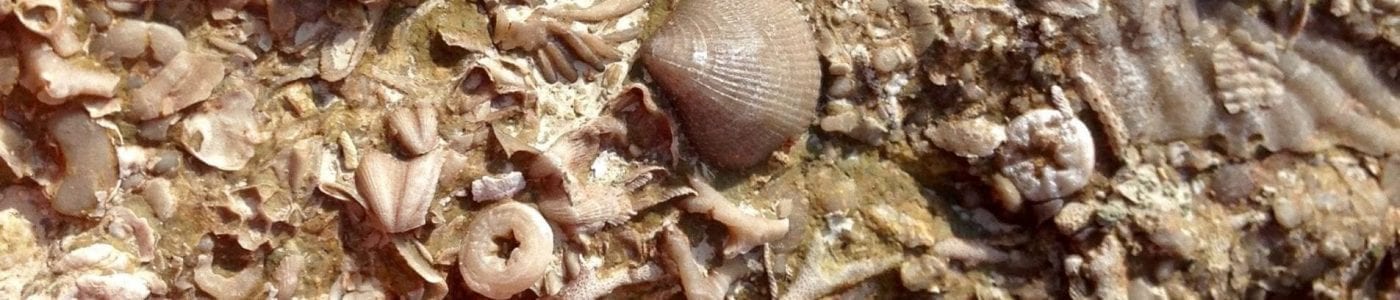

New research by a Bristol MSc in Palaeobiology student shows that sauropod dinosaurs had colour-bearing melanosomes in their skin. Tess Gallagher and colleagues studied fossilised sauropod skin remains, approximately 145 million years old, collected in 2019 and 2022 at the “Mother’s Day” quarry in Montana.
Although the fossil remains cannot be definitively identified, they might have belonged to a Diplodocus. Tess took tiny samples from four scales using a scalpel and then examined them with a scanning electron microscope, which allowed her to see details at the cellular level. The skin was preserved in three dimensions, not just as an imprint, says Gallagher.
It also showed the presence of various melanosomes — structures within cells that store melanin and form the color of skin, hair, eyes, and feathers. “I expected to find at least traces of melanin,” she says. “But we found evidence that sauropods could have different forms of melanosomes, which ultimately means the potential for diverse colours.”
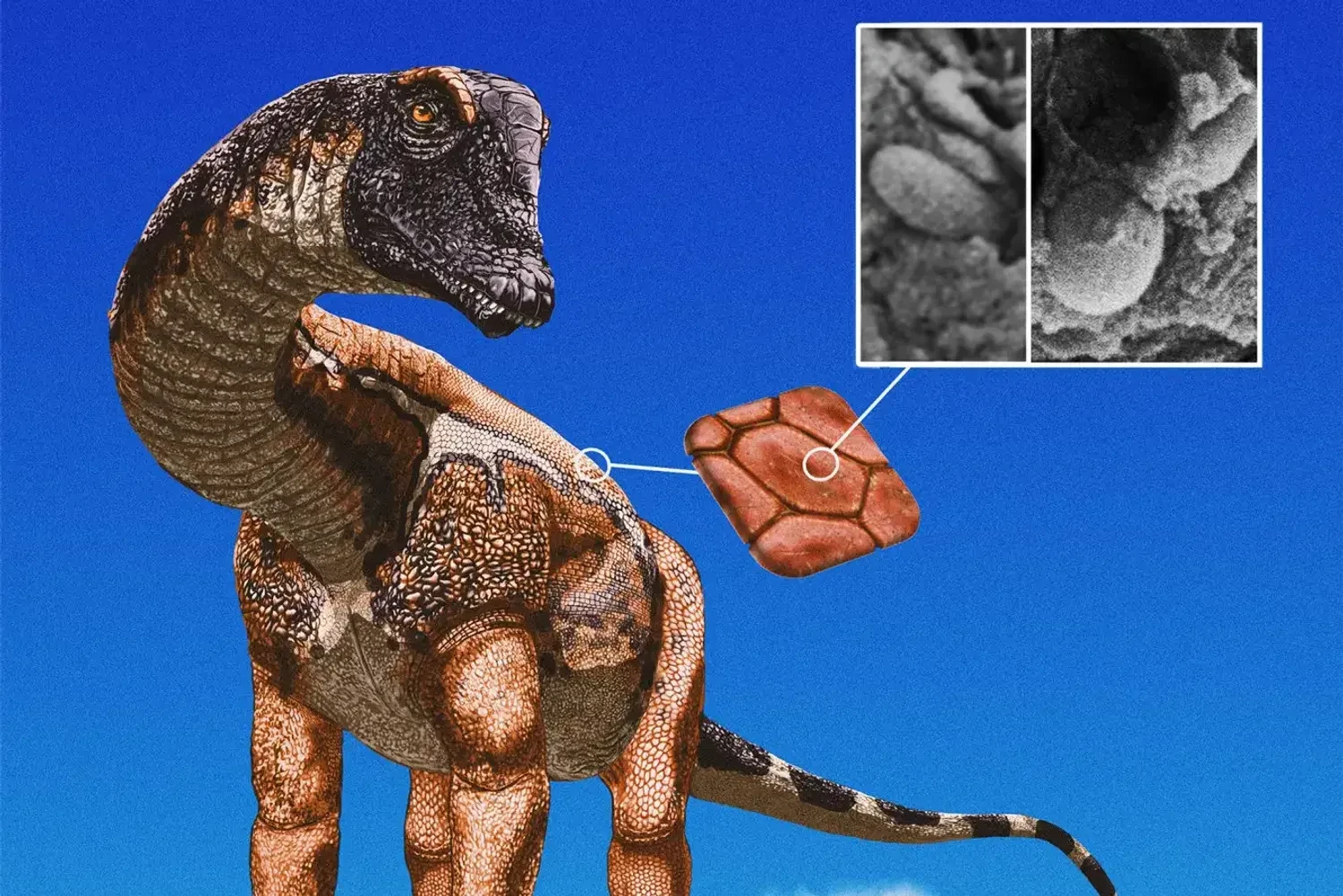
Melanosomes were present in every sample studied, and they belonged to two main types: elongated and disc-shaped. However, it is currently impossible to say exactly what colours the skin of these sauropods might have been — only that the variety of structures indicates several possible shades.
The closest analogy to disc-shaped structures are the platelet melanosomes found in the feathers of modern birds. Gallagher says they may indicate Diplodocus‘ ability to create a variety of colors using its melanosomes. “These animals could have had much more distinct color patterns, rather than being gray, as they were often depicted in old palaeoart.”
Read the paper here.
1 thought on “First report of melanosomes in sauropod dinosaurs”
Comments are closed.